良工阀门:套筒结构阀门
Lianggong Valve: Sleeve Structure Valve
如今人们在流体控制,机器视觉,以及非标自动化等多个领域已经有了较为深入的研究,大家对工业领域的探索已经越过了从0到1的初始阶段,向着更精密、更高效、更普适的角度迈进。本期是《一天带你认识一个新概念》系列的第一期,套筒蒸汽阀篇。我们将专注于高校与研究所近几年来的研究选题与方向,为大家科普解析这些研究对象。
Nowadays, people have conducted in-depth research in multiple fields such as fluid control, machine vision, and non-standard automation. The exploration of the industrial field has surpassed the initial stage from 0 to 1 and is moving towards a more precise, efficient, and universal perspective. This issue is the first installment of the "One Day Introducing a New Concept" series, titled "Sleeve Steam Valve". We will focus on the research topics and directions of universities and research institutes in recent years, and provide science popularization and analysis of these research objects for everyone.
蒸汽调节阀是一种由“执行机构+阀体”组成的自动控制阀门,通过接收工业控制系统(如DCS、PLC)的信号,驱动阀芯与阀座相对运动,改变蒸汽流通面积,从而实现对蒸汽参数(压力/流量/温度)的精准调节,是调节流体介质流量和压力以保证机组能够安全、高效、经济运行的关键控制元件,被称为热力系统的“咽喉”①。
A steam regulating valve is an automatic control valve composed of an actuator and a valve body. By receiving signals from industrial control systems such as DCS and PLC, it drives the relative movement of the valve core and seat, changes the steam flow area, and achieves precise adjustment of steam parameters (pressure/flow rate/temperature). It is a key control component for regulating fluid medium flow rate and pressure to ensure safe, efficient, and economical operation of the unit, and is known as the "throat" of the thermal system.
但随着工况的复杂化、对精度的高要求,阀内的流态变得十分复杂,普通的蒸汽调节阀已经无法满足工业活动的需求。因此部分高校与研究所提出了套筒式蒸汽调节阀,并对其结构设计和流动特性进行了研究分析与优化升级。? 作为工业流体控制领域的关键设备,套筒式蒸汽阀凭借其稳定的调节性能、抗冲蚀设计和宽工况适配能力,广泛应用于电力、石化、冶金等行业的蒸汽输送与工艺控制场景。
But with the increasing complexity of working conditions and high precision requirements, the flow state inside the valve has become very complex, and ordinary steam regulating valves can no longer meet the needs of industrial activities. Therefore, some universities and research institutes have proposed sleeve type steam regulating valves and conducted research, analysis, optimization, and upgrading on their structural design and flow characteristics.? As a key equipment in the field of industrial fluid control, sleeve type steam valves are widely used in steam transportation and process control scenarios in industries such as power, petrochemicals, metallurgy, etc., due to their stable regulating performance, erosion resistance design, and wide working condition adaptability.
它是一种以“套筒”为核心节流元件的蒸汽控制阀门,通过阀芯在套筒内的轴向移动,改变蒸汽流通面积,实现对蒸汽压力、流量、温度的精准调节,同时具备抗汽蚀、减噪音、耐高温高压的特性,是工业蒸汽系统“稳工况、降能耗”的关键设备。
It is a steam control valve with a "sleeve" as the core throttling element, which changes the steam flow area through the axial movement of the valve core inside the sleeve, achieving precise adjustment of steam pressure, flow rate, and temperature. At the same time, it has the characteristics of anti cavitation, noise reduction, and high temperature and high pressure resistance. It is a key equipment for industrial steam systems to "stabilize working conditions and reduce energy consumption".
套筒调节阀主要分为三大结构:套筒、阀芯、阀座和阀体。套筒是阀门的“节流核心”,通常开有特定形状的窗口(如矩形、梯形、V型),窗口设计直接决定流量特性(线性、等百分比、快开);阀芯与套筒精密配合,通过执行机构(气动/电动)驱动,沿轴向移动改变窗口开度,控制蒸汽通断与流量;阀座采用硬质合金或耐磨材料,与阀芯形成密封副,防止蒸汽泄漏;阀体采用耐高温高压设计,适配蒸汽介质的极端工况。
Sleeve regulating valves are mainly divided into three structures: sleeve, valve core, valve seat, and valve body. The sleeve is the "throttling core" of the valve, usually with windows of specific shapes (such as rectangular, trapezoidal, V-shaped), and the window design directly determines the flow characteristics (linear, equal percentage, fast opening); The valve core and sleeve are precisely matched, driven by an actuator (pneumatic/electric) to move along the axial direction to change the window opening and control the steam on/off and flow rate; The valve seat is made of hard alloy or wear-resistant material, forming a sealing pair with the valve core to prevent steam leakage; The valve body adopts a high-temperature and high-pressure resistant design, suitable for extreme working conditions of steam media.
我们可以将套筒调节阀看作“可调大小的水管出水口”:套筒相当于带固定窗口的“限流板”,阀芯相当于“堵头”--执行机构推动阀芯移动时,阀芯与套筒窗口的重叠面积变化,蒸汽通过的“通道大小”随之改变,从而精准调节蒸汽流量;同时,套筒的导向结构能稳定阀芯运动,避免高压蒸汽冲击导致的阀芯振动。
We can regard the sleeve regulating valve as an "adjustable water pipe outlet": the sleeve is equivalent to a "flow limiting plate" with a fixed window, and the valve core is equivalent to a "plug" - when the actuator pushes the valve core to move, the overlapping area between the valve core and the sleeve window changes, and the "channel size" through which steam passes changes accordingly, thereby accurately adjusting the steam flow rate; At the same time, the guiding structure of the sleeve can stabilize the movement of the valve core and avoid valve core vibration caused by high-pressure steam impact.
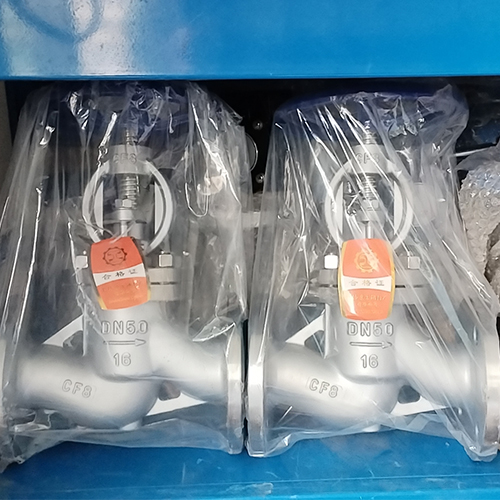
但国内缺乏高参数阀门的理论依据,普通的套筒蒸汽调节阀在实验效率与流量特性等多个方面仍需优化。
However, there is a lack of theoretical basis for high parameter valves in China, and ordinary sleeve steam regulating valves still need to be optimized in terms of experimental efficiency and flow characteristics.
因此浙江大学化工机械研究所人员针对套筒式蒸汽调节阀的开孔优化与流动特性等问题设计了多级套筒式蒸汽调节阀,结构主要由多级套筒、阀体、阀杆、阀盖和阀芯等组成。过热蒸汽从阀门进口流入,经过多级套筒和阀芯,从阀门出口流出。多级套筒的作用是使蒸汽流动时产生一定的局部阻力,从而控制过热蒸汽的绝热压缩过程,达到控制蒸汽流量降压的目的②。(具体参数详见《自动化仪表》套筒式蒸汽调节阀开孔优化与流动特性分析)
Therefore, personnel from the Institute of Chemical Machinery at Zhejiang University have designed a multi-stage sleeve type steam regulating valve to address issues such as hole optimization and flow characteristics of sleeve type steam regulating valves. The structure mainly consists of multi-stage sleeves, valve bodies, valve stems, valve covers, and valve cores. Overheated steam flows in from the valve inlet, passes through multi-stage sleeves and valve cores, and flows out from the valve outlet. The function of multi-stage sleeves is to generate a certain local resistance when steam flows, thereby controlling the adiabatic compression process of superheated steam and achieving the goal of controlling steam flow and reducing pressure. (For specific parameters, please refer to "Optimization of Opening and Flow Characteristics Analysis of Sleeve Steam Regulating Valve in Automation Instruments")
当前,尽管高参数场景下的蒸汽调节阀的结构与性能优化仍有提升空间,但多个科研团队通过结构创新、流场仿真与材料升级的深度融合,使得套筒式蒸汽阀正朝着更精密、更智能、更耐用的方向迈进。未来,随着人工智能、数字孪生等技术与流体控制领域的进一步结合,套筒式蒸汽阀将在更广阔的场景中实现突破,为工业智能化转型注入更强劲的动力,持续守护热力系统的稳定高效运行,成为“双碳”目标下绿色制造的重要支撑。
Currently, although there is still room for improvement in the structure and performance optimization of steam regulating valves in high parameter scenarios, multiple research teams are deeply integrating structural innovation, flow field simulation, and material upgrades to make sleeve type steam valves move towards greater precision, intelligence, and durability. In the future, with the further integration of technologies such as artificial intelligence and digital twins with the field of fluid control, sleeve type steam valves will achieve breakthroughs in a wider range of scenarios, injecting stronger power into the transformation of industrial intelligence, continuously safeguarding the stable and efficient operation of thermal systems, and becoming an important support for green manufacturing under the "dual carbon" goal.


 企业公告:
企业公告: